
A busy professional cannot afford to train recklessly.
If you have work the next morning, meetings to attend, a family to support, or daily responsibilities that cannot stop, the fear of getting hurt in martial arts is real. Many adults want the benefits of training, but they worry about walking into a class, getting pushed too hard, and leaving with an injury that affects the rest of their week.
At KI-SENSHI Martial Arts in Tolleson, adult training is built around technical development, controlled intensity, and steady progression. The goal is not to prove who is toughest on the training floor. The goal is to help students build strength, stamina, self-defense skills, discipline, and confidence in a way they can sustain.
Most adults are not afraid of hard work. They are afraid of unnecessary risk.
A professional may think:
These are valid concerns. A responsible martial arts program should take them seriously.
Hard training should have structure.
You can sweat, push yourself, improve your conditioning, learn self-defense, and challenge your limits without turning every class into a fight. Safe training depends on coaching, technique, control, communication, and the right pace for each student.
That is where a school’s environment matters.
In martial arts, force without technique creates bad habits.
A beginner who relies only on strength may move with tension, poor balance, and uncontrolled reactions. That can increase fatigue and make training feel chaotic. Technical instruction helps students learn how to move with better structure.
At KI-SENSHI Martial Arts, the foundation is not brute force. Students learn to build control through:
Technique helps adults train with purpose. Instead of trying to overpower every movement, students learn how to move better.
Control is not automatic. It is trained.
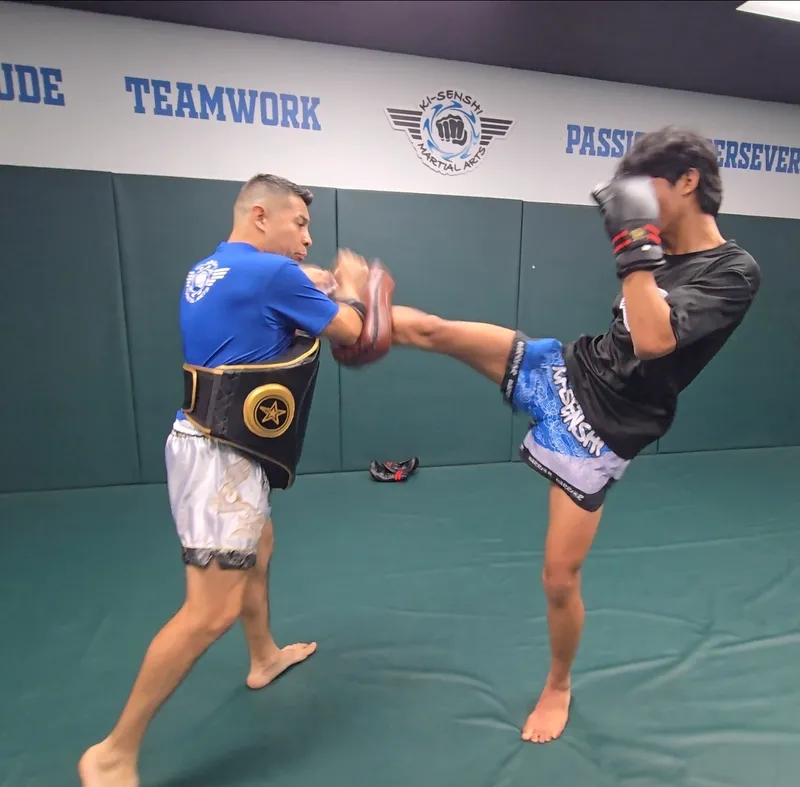
A safe martial arts environment teaches students how to manage speed, power, distance, and contact level. This matters especially for adults who want to train consistently without turning every class into a high-risk situation.
In controlled training, students are expected to respect their partner, follow instructor guidance, and understand that the purpose of practice is improvement, not domination.
For adults who are concerned about injury, the word “sparring” can sound intimidating. But sparring does not have to mean uncontrolled fighting.
When sparring is part of a martial arts program, it should be structured, supervised, and appropriate for the student’s level. Instructors should set expectations, monitor intensity, correct unsafe habits, and make sure students understand the goal of the drill.
For beginners, the focus may be on controlled movement, defense, reactions, timing, and awareness before intensity increases.
A responsible martial arts program can include different training formats depending on the class and student level.
Some sessions may focus on technique. Others may emphasize conditioning, pad work, partner drills, coordination, or controlled applications. The point is to build ability over time instead of forcing every student into the same level of intensity from day one.
Busy professionals benefit from this because they can train hard while still protecting their ability to work, move, and recover.
You do not need to match advanced students on your first day.
A safer approach is to begin with the fundamentals, learn the class rhythm, and gradually increase effort as your body adapts. Progression gives your joints, muscles, coordination, and conditioning time to catch up with your goals.
Instructors are there to help students train with better form, better timing, and better control.
When an instructor corrects your stance, hand position, balance, or movement pattern, the correction is not just about performance. It can also help you move more safely and efficiently.
Martial arts require trust.
A good training partner does not try to “win” every drill. They help create an environment where both people can improve. Respect means controlling contact, following the drill, communicating clearly, and avoiding ego-driven intensity.
The best martial arts training is not about surviving one brutal class. It is about being able to train next week, next month, and next year.
Longevity means:
Busy adults often struggle with random workouts because there is no clear plan. Martial arts gives you a structured environment where every class has a purpose.
Instead of trying to decide what workout to do after a long day, you can show up, follow instruction, and train with guidance.
Work stress can build up in the body.
Martial arts gives adults a physical outlet through movement, striking, conditioning, and focus. But unlike an uncontrolled workout, a coached class channels that intensity into discipline and skill.
You can train hard, clear your head, and still leave with control.
For many adults, the value of martial arts goes beyond exercise.
Training can help build:
That combination is especially valuable for professionals who want fitness with purpose.
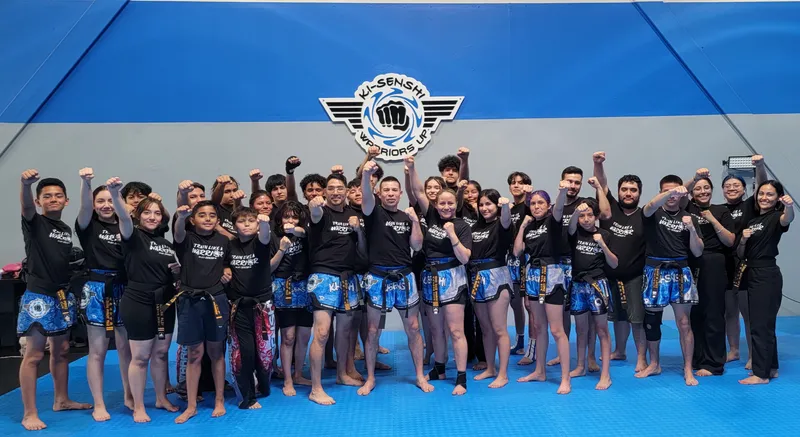
KI-SENSHI Martial Arts is a strong fit for adults near Tolleson, Avondale, West Phoenix, Goodyear, Cashion, Litchfield Park, Peoria, Buckeye, Estrella Park, and Laveen who want to train seriously without reckless pressure.
This may be right for you if:
Yes, adults can train martial arts with reduced injury risk when classes emphasize technique, supervision, control, and gradual progression.
No physical activity is completely risk-free, but a responsible training environment helps students learn safely, avoid reckless intensity, and build skill before increasing difficulty.
Sparring can be safer for beginners when it is controlled, supervised, and introduced at the right time.
Beginners should not be thrown into uncontrolled contact. They need fundamentals first, including stance, defense, movement, distance, and partner control.
No, not every martial arts class has to include sparring.
Many classes may focus on technique, conditioning, pad work, partner drills, movement, and controlled practice. The exact format depends on the program, instructor, and student level.
Start slowly, listen to your instructor, focus on technique, communicate with training partners, and avoid trying to prove yourself too quickly.
Most beginner mistakes come from tension, rushing, poor control, or comparing yourself to advanced students.
Yes, martial arts can be a practical workout for busy professionals because it combines structure, coaching, conditioning, skill development, and stress relief.
It gives adults a scheduled place to train without having to plan every workout alone.
David Lopez Aguilar is listed by KI-SENSHI Martial Arts as Sensei at the school. His teaching perspective emphasizes that martial arts is more than kicking, punching, and belts; it is also about helping students build confidence, discipline, character, focus, and respect.
KI-SENSHI Martial Arts
Se habla español.
KI-SENSHI Martial Arts serves students and families in Chandler. You do not need to walk into martial arts with confidence already built. You can build it inside the right environment.
View Schedule & Pricing Options at KI-SENSHI Martial Arts and start training in a supportive, zero-ego community.